01
The attraction
Posters, billboards and social posts: scan the code and make your own music.
Case study 05 / 07
← All workThe city's sensors, turned into music.
01 The brief
Visit Antwerp asked for an innovative, digital-first concept for 18 to 36 year olds: a group that distrusts official tourism sources, discovers cities through social media and friends, and has little patience for content made for them by an institution. Antwerp is famous for diamonds, fashion and fine dining, but that isn't what they're looking for. They want authentic experiences and budget-friendly options.
02 The audience
Key insight
Young urban travellers don't find Antwerp relevant. They know it exists, but nothing has made them feel it was made for them. The city's most interesting qualities are invisible in conventional tourism content.
03 The concept
Out of Visit Antwerp's five themes, we chose the 24/7 Pulse. Antwerp is a pilot city for the City of Things sensor network, so we connected that live city data to generative electronic music: a real-time soundscape that changes with the city. The platform never tells anyone Antwerp is great. It creates the conditions where that conclusion is obvious.
We didn't just tell people Antwerp is alive 24/7. We let them hear it.
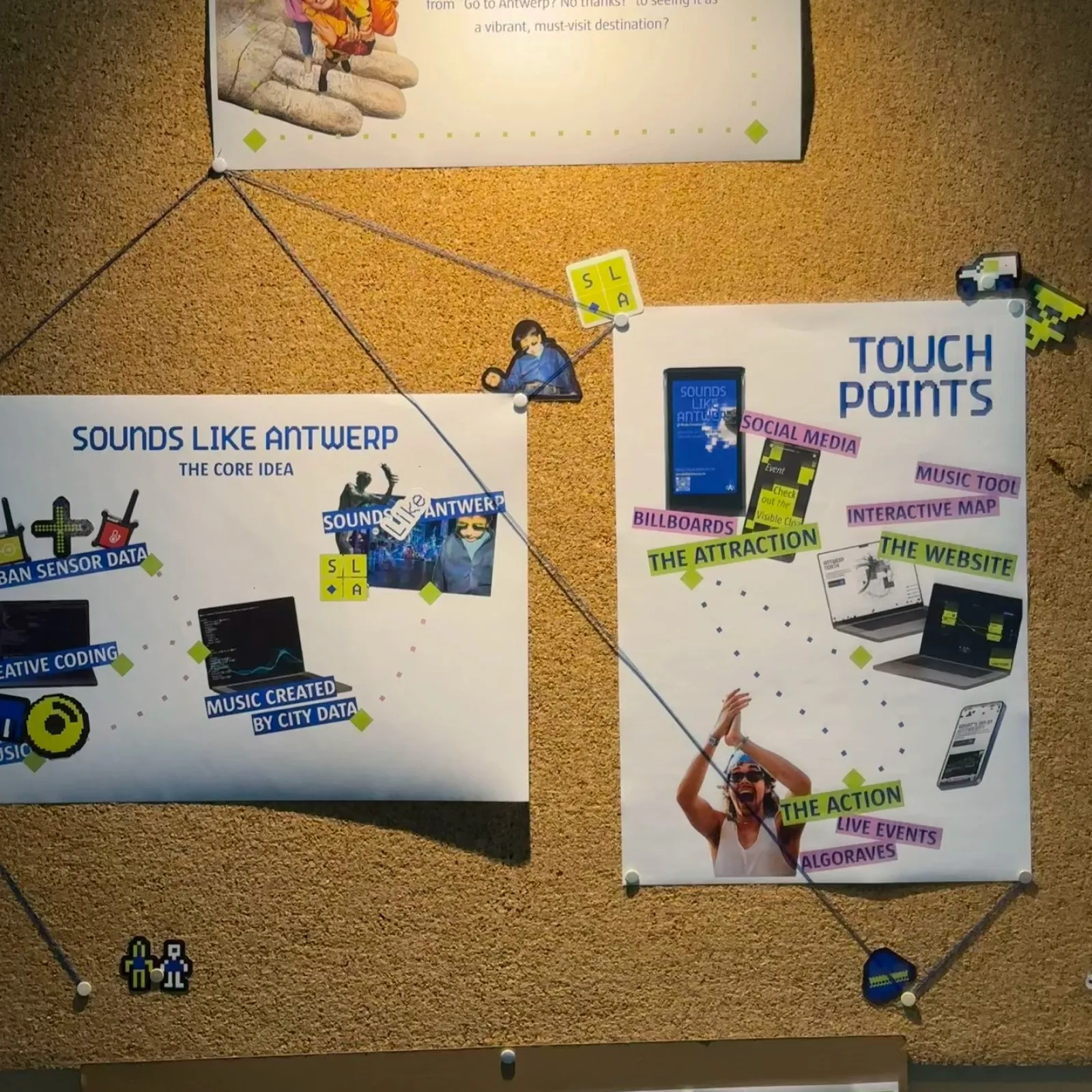
04 Touchpoints
Posters, billboards and social posts: scan the code and make your own music.
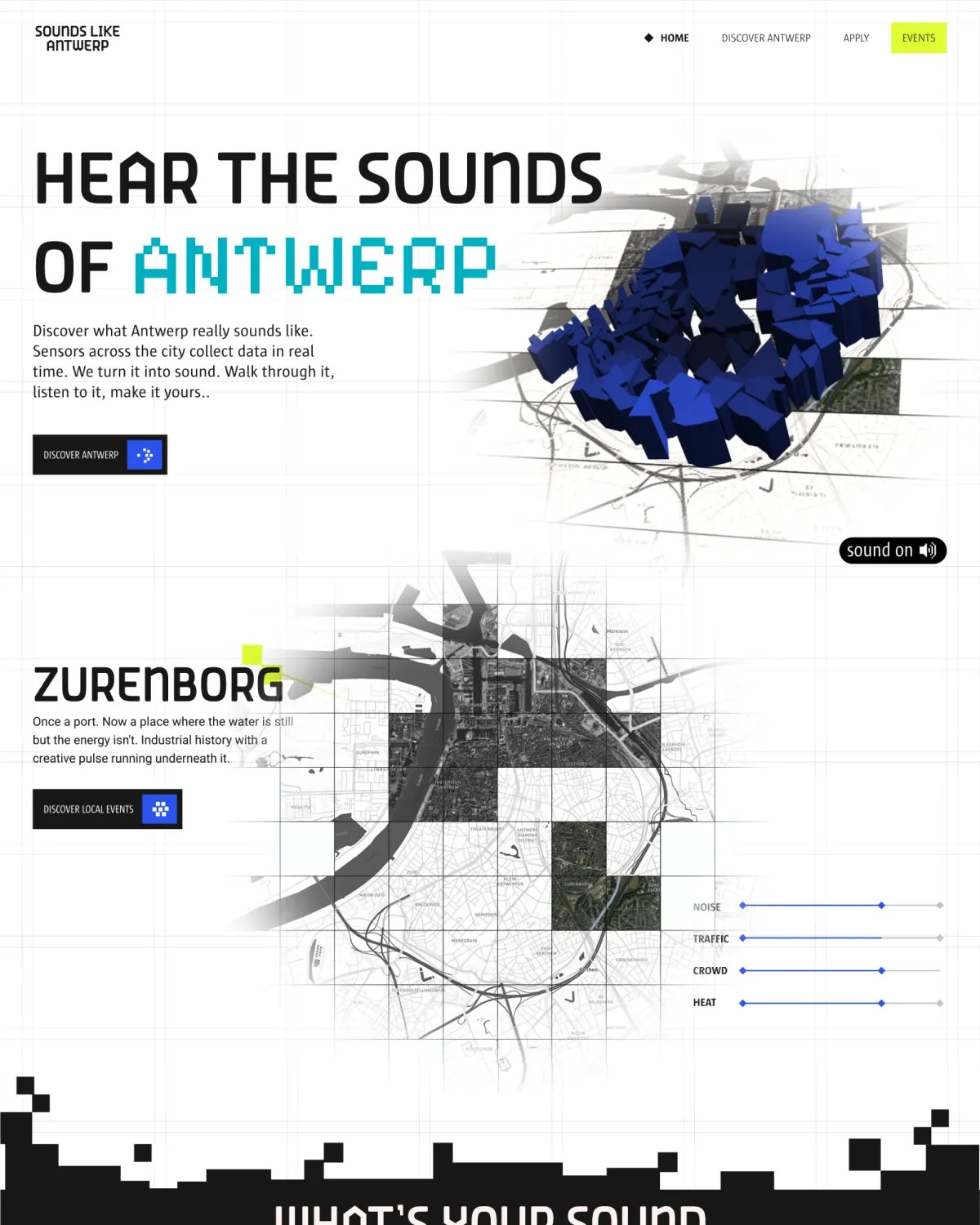
Every neighbourhood has its own sound, driven by noise, traffic, crowd and heat sensors.
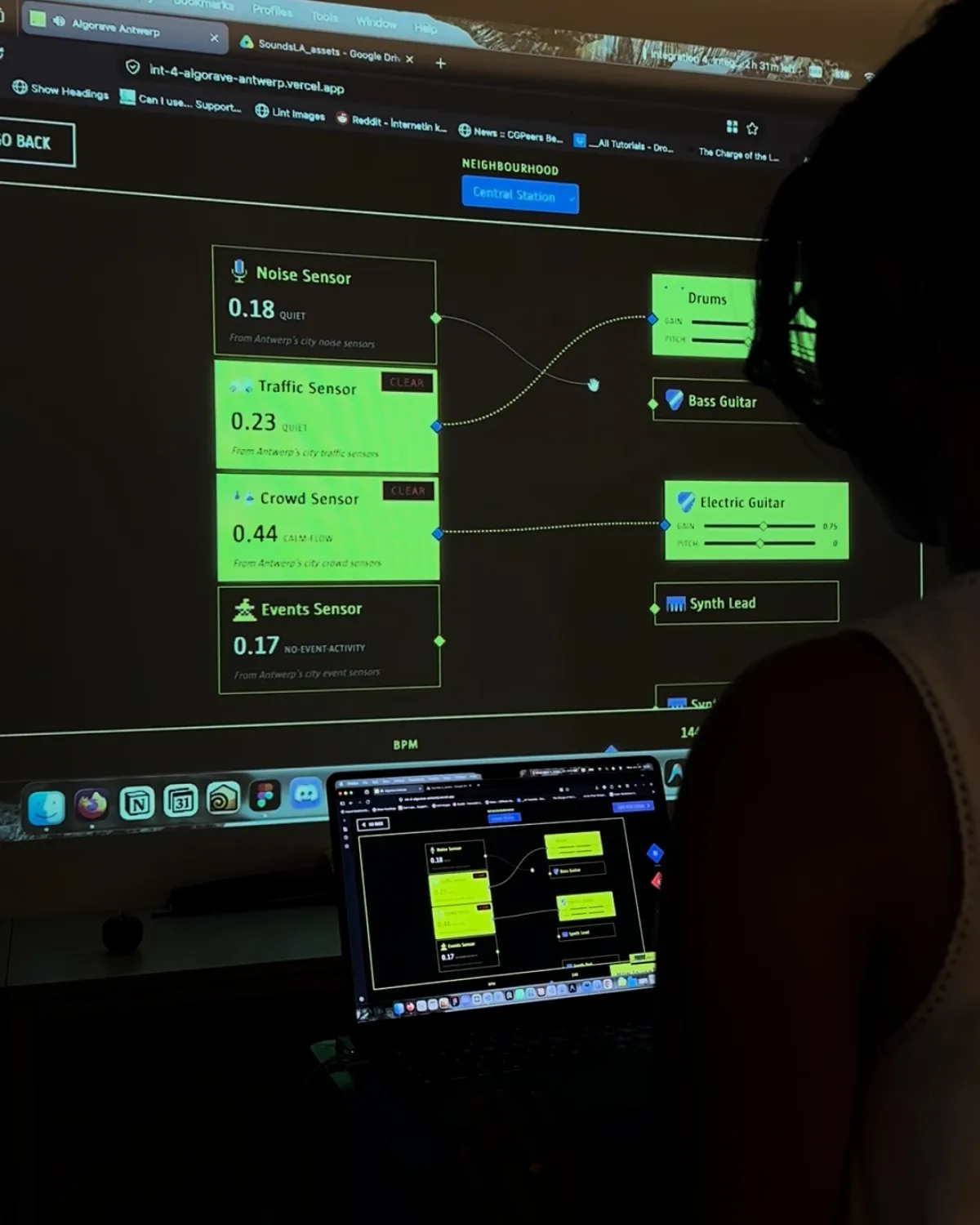
Patch the city's sensors to drums, bass and synths, no code needed.
05 My role
Five interviews, a survey with a buy-a-feature exercise, subculture research and a deficit–surplus analysis of what other cities do.
I ran the sessions: quick associations, the 5 whys, an assumption matrix, six thinking hats, SWOT and a MoSCoW prioritisation.
Personas for the visitor and the artist built on Schwartz values, a customer journey, an experience mind map and storyboards.
I wrote and designed the project site that tells the whole story, from brief to conclusion.
06 Process
Interviews, a survey with buy-a-feature, and what young travellers expect from a city.
From early associations to an assumption matrix, six thinking hats and MoSCoW.
Proximity-based music couldn't live on a website, so after a consult it became a GPS-based soundscape that starts when you open the site.
Test rounds with the target audience, where people kept playing with the sound sliders.
07 What we learned
Mapping pedestrian counts and traffic changes to filters, BPM and bass lines.
UX, visual design and development each ran their own track from day two.
Live DJ sets that react to crowd sensors, sound kiosks at Antwerp Central, and location-based streams.